
Architectural Style
A Blend of Colonial and Nawabi Traditions
The Residence of Sir Wasif Ali Mirza at 85 Park Street exemplifies the architectural synthesis that characterised Kolkata during the late 19th and early 20th centuries. The building combines elements of European classical architecture with Nawabi and Indo-Islamic design traditions, creating a distinctive aesthetic that reflects the cultural identity of its original occupant.
This architectural approach was common among the Bengali aristocracy and Nawabi families who sought to maintain their cultural heritage while adapting to the changing urban landscape of colonial Kolkata. The result is a building that speaks to multiple cultural traditions simultaneously.
The structural design incorporates elements typical of the period: high ceilings, spacious rooms, wide verandahs, and a central courtyard that served as the organisational heart of the residence. These features reflect both practical considerations for the tropical climate and the aesthetic sensibilities of the Nawabi household.
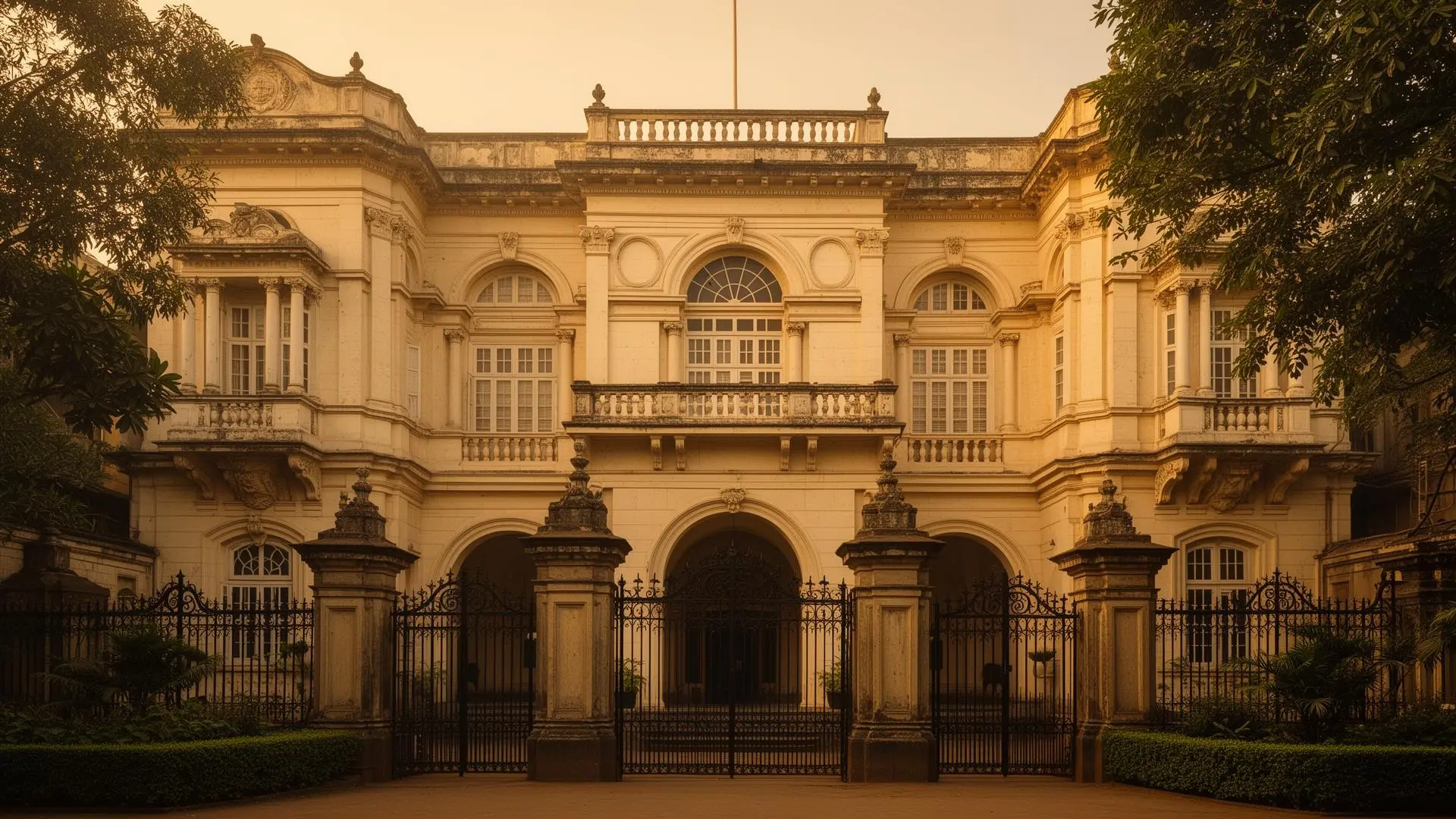
Ornamental architectural details characteristic of the heritage period
Belur Math Architecture
A Symphony of Faiths & Architectural Grandeur
The magnificent architecture of Belur Math stands as a profound testament to Swami Vivekananda’s vision of universal harmony. Designed by Swami Vijnanananda, the structure is a masterful synthesis of Hindu, Islamic, Buddhist, and Christian architectural styles, reflecting Sri Ramakrishna’s teaching that "all religions lead to the same goal."
When viewed from different angles, the grand edifice presents multiple faces. From the front, it echoes the grandeur of a traditional Hindu temple, inspired by the ornate carvings of South India and the structural aesthetics of Rajputana. From the sides, the towering central dome subtly resembles a mosque, while the overarching layout incorporates elements typical of a Christian church.
Built predominantly with Chunar stone, this structural marvel is not merely a place of worship but a visual representation of spiritual unity. The intricately carved pillars, expansive courtyards, and the serene natmandir (congregation hall) are designed to evoke peace and introspection, making it a pivotal landmark in India’s spiritual and architectural landscape.
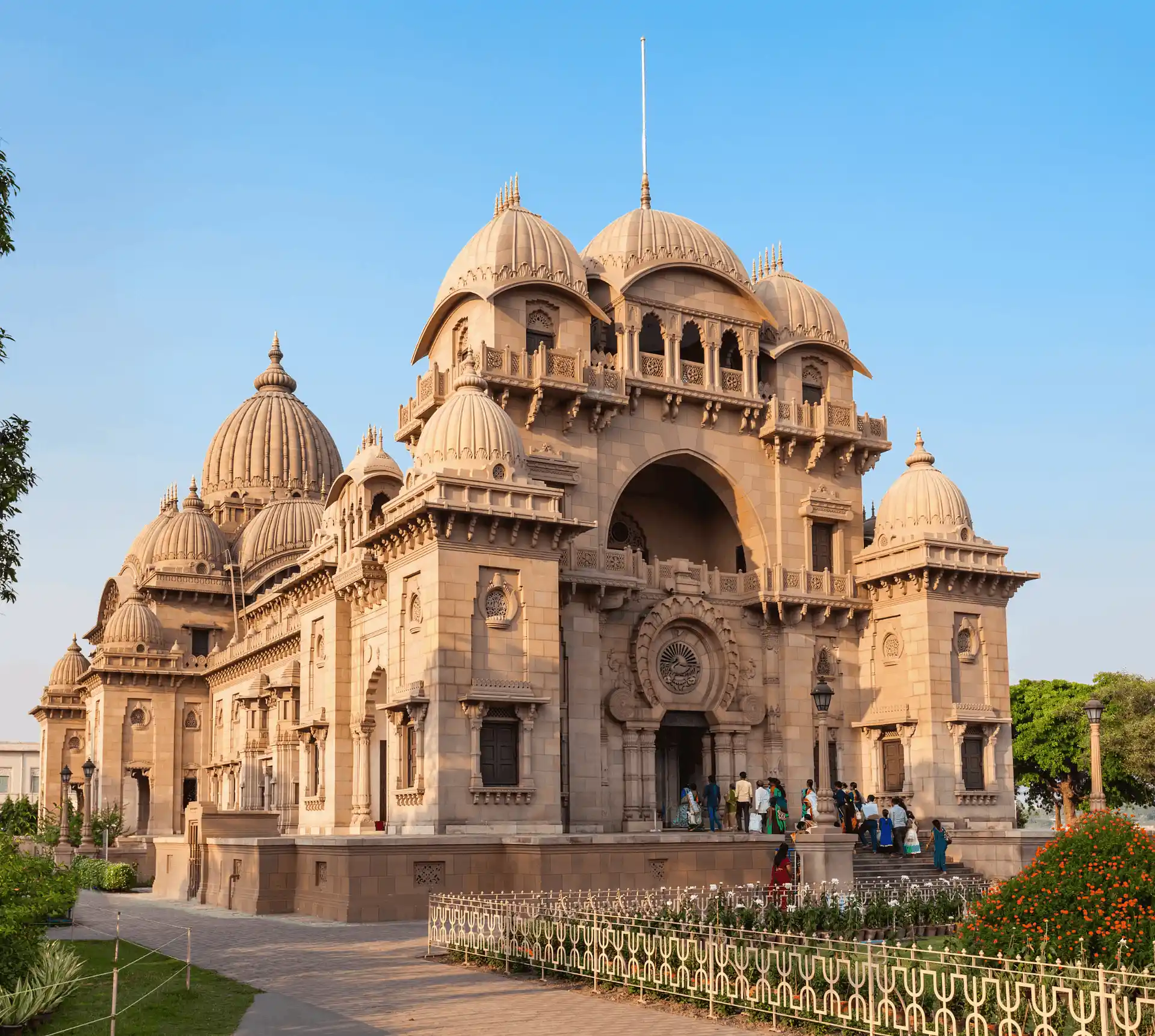
The breathtaking façade showcasing universal architectural harmony
The Indian Museum
The Architectural Crown Jewel of Kolkata
Founded in 1814, the Indian Museum stands proudly as the oldest and largest multipurpose museum in the Asia-Pacific region. Its breathtaking neoclassical facade along Jawaharlal Nehru Road serves as a magnificent portal into India's rich cultural and historical legacy, drawing history enthusiasts and global travelers alike.
Designed by the renowned architect Walter B. Granville, the building's imposing colonnades, expansive courtyards, and soaring ceilings reflect the true grandeur of colonial-era architecture. The pristine white structure perfectly balances monumental scale with intricate design, making it an unmissable landmark in Kolkata's heritage trail.
Beyond its stunning exterior, the museum's sprawling galleries are structurally optimized to house rare antiquities, Mughal paintings, and ancient fossils. The harmonious blend of European classical elements with the city's intellectual spirit solidifies the Indian Museum not just as a repository of artifacts, but as an enduring architectural masterpiece.
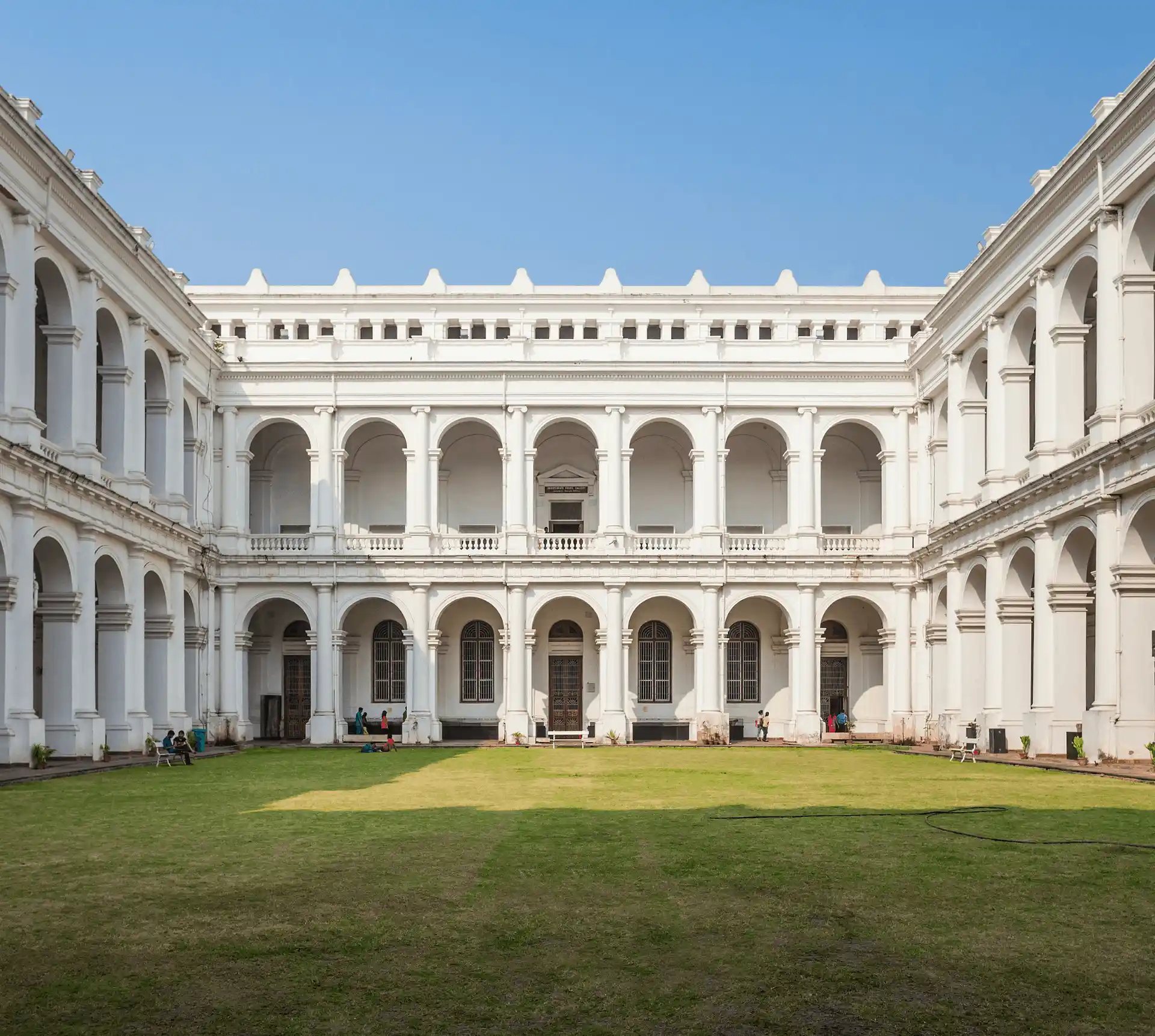
The grand neoclassical facade of the Indian Museum, Kolkata